

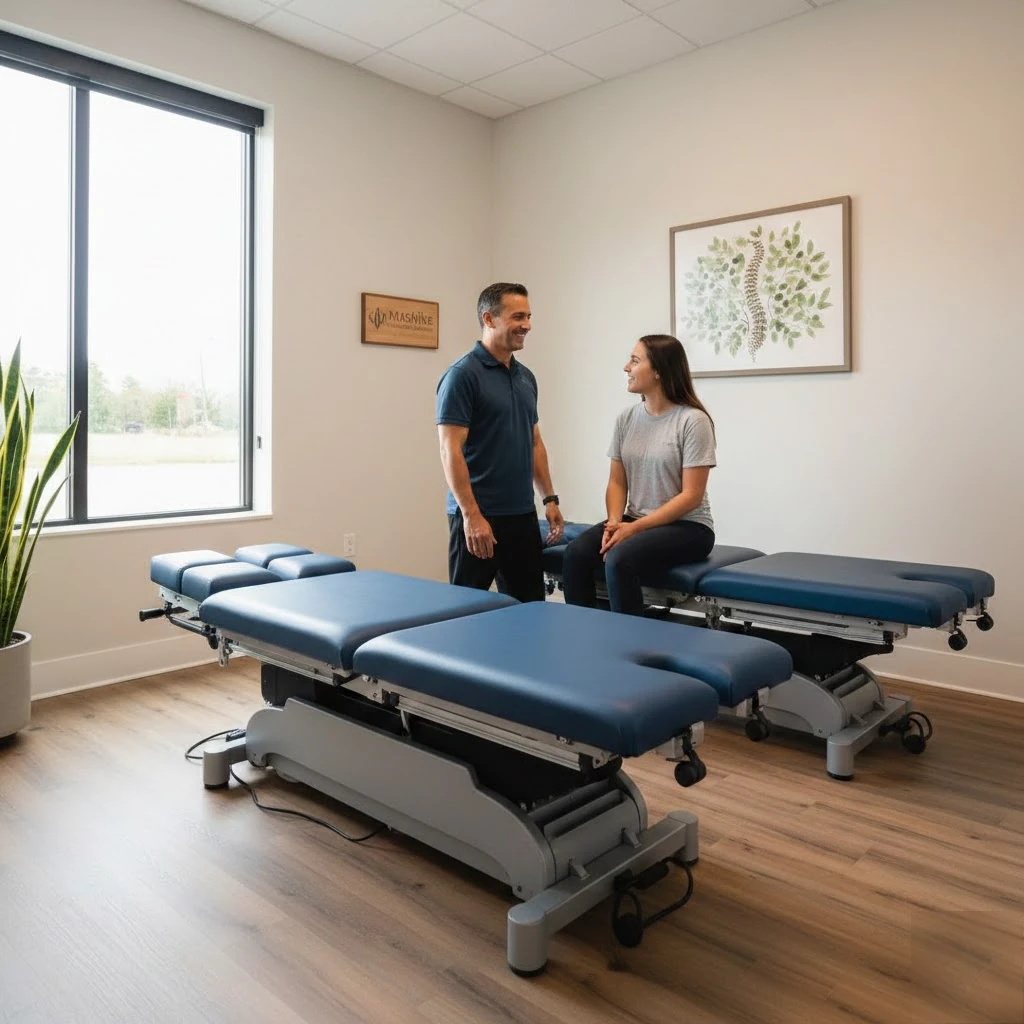
Non-Surgical Spinal Decompression Therapy in the Carolinas — Lasting Back Pain Relief Without Surgery or Injections
Short answer
What is spinal decompression therapy?
Spinal decompression is a non-surgical, computer-controlled traction therapy that gently stretches the spine. It creates negative pressure inside a damaged disc, helping draw bulging or herniated material back into position and relieving pressure on nearby nerves. At Optimal Health U.S. in Gaffney, SC, Dr. Holet uses it for herniated discs, sciatica, stenosis and chronic back pain — without surgery or injections.
Reviewed by Dr. Chris Holet, DC ·

If you’ve been told that surgery is your only option for your herniated disc, sciatica, or chronic back pain — stop. Before you go under the knife, there’s a powerful, FDA-cleared, non-surgical treatment that has helped thousands of patients avoid surgery and reclaim their lives: Spinal Decompression Therapy.
At Optimal Health Solutions in Upstate South Carolina, Dr. Christopher Holet uses state-of-the-art spinal decompression to gently stretch the spine, relieve pressure on compressed discs and nerves, and create the ideal conditions for the body to heal itself — naturally. No surgery. No injections. No addictive pain medications.
If you’ve been living with debilitating back pain, leg pain, or numbness and you’re ready for a real solution, this page is for you.
Why Do Spinal Problems Cause So Much Pain?
The spine is made up of 24 vertebrae separated by soft, gel-filled discs. These discs act as shock absorbers — but over time, from injury, poor posture, repetitive stress, or simply aging, they can bulge, herniate, or degenerate. When this happens, the disc pushes against nearby nerves, causing everything from localized back pain to shooting pain down the legs, numbness, tingling, and muscle weakness.
Most conventional treatments — pain medication, steroid injections, and surgery — attempt to manage symptoms without ever addressing the underlying disc damage. That’s why so many patients end up back where they started, or worse. Spinal decompression works differently — it targets the damaged disc directly, creating negative pressure that draws the disc material back into position and promotes healing from within.

Conditions Spinal Decompression Can Treat
Herniated & Bulging Discs
Decompression creates negative intradiscal pressure, pulling herniated material back toward the center of the disc and relieving nerve compression.
Sciatica
Sciatic nerve pain, numbness, and tingling down the leg is often caused by disc compression — decompression relieves that pressure directly at the source.
Degenerative Disc Disease
By restoring disc height and promoting nutrient flow into damaged discs, decompression slows degeneration and restores function.
Spinal Stenosis
Narrowing of the spinal canal compresses nerves and causes pain — decompression gently widens the canal and relieves pressure on affected nerve roots.
Facet Syndrome
Worn facet joints cause stiffness, pain, and reduced mobility. Decompression offloads the facet joints, reducing inflammation and restoring movement.
Failed Back Surgery Syndrome
Many patients who’ve already had back surgery still live with pain. Decompression is one of the few non-surgical options that can provide relief after failed procedures.
Chronic Lower Back Pain
Persistent lower back pain without a clear surgical cause responds exceptionally well to decompression — addressing the disc and nerve root simultaneously.
Neck Pain & Cervical Disc Issues
Spinal decompression works for both the lumbar and cervical spine — relieving neck pain, arm numbness, and headaches caused by compressed cervical discs.
Our Spinal Decompression Treatment Program
At Optimal Health Solutions, spinal decompression is never a standalone treatment. Dr. Holet designs a comprehensive care program that combines decompression with supporting therapies to maximize your results and prevent recurrence:
- Non-surgical spinal decompression— FDA-cleared traction therapy targeting the damaged disc with computer-controlled precision to restore disc height and relieve nerve compression
- Chiropractic adjustments— spinal realignment to correct vertebral misalignments that contribute to disc stress and nerve irritation, enhancing the effects of decompression
- Red light therapy— 635nm low-level laser therapy to reduce inflammation in surrounding soft tissue, accelerate cellular repair, and support disc healing
- Therapeutic exercise & rehabilitation— targeted core strengthening and mobility exercises to stabilize the spine, support the healing disc, and prevent re-injury
- Postural correction— identification and correction of the postural patterns and movement habits that originally caused or aggravated the disc problem
- Nutritional support— anti-inflammatory nutritional guidance to reduce systemic inflammation that slows disc healing and prolongs recovery
- Lifestyle and ergonomic guidance— practical advice on sleeping positions, workstation setup, and daily movement patterns to protect your spine between sessions
- Maintenance and wellness care— ongoing monitoring and periodic care to ensure long-term spinal health and prevent future disc problems

Not sure if spinal decompression is right for you?
Schedule a consultation with Dr. Holet and find out today.
FAQs About Non-Surgical Spinal Decompression Therapy in the Carolinas
Is spinal decompression painful?
Most patients find spinal decompression sessions comfortable and relaxing. The traction is applied gradually and computer-controlled to stay within a therapeutic range your body can tolerate. Rather than sharp or intense pulling, most patients describe a gentle stretching sensation. Any initial mild soreness after early sessions typically resolves quickly as treatment progresses.
How is spinal decompression different from surgery or steroid injections?
Surgery and steroid injections attempt to manage spinal pain through structural intervention or temporary inflammation suppression, neither of which restores the disc itself. Spinal decompression addresses the damaged disc directly by reducing intradiscal pressure, encouraging the disc to retract away from the nerve, and creating the conditions for natural healing. There is no incision, no downtime, and no risk of surgical complications or dependency on pain medication.
How many spinal decompression sessions will I need?
The number of sessions varies depending on your diagnosis, the severity of disc damage, and how long the condition has been present. Dr. Holet evaluates your case thoroughly during your initial consultation and designs a care plan with a clear treatment timeline. Many patients begin noticing meaningful relief within the first several sessions, with continued improvement as the full program progresses.
How do I know if I am a candidate for spinal decompression therapy in Gaffney, SC?
The best way to find out is to schedule a consultation with Dr. Holet at Optimal Health Solutions. During your visit, he will review your health history, evaluate your symptoms, and assess your spinal condition to determine whether spinal decompression is appropriate for your specific situation. Patients from across Upstate South Carolina and the Carolinas are welcome to call 864-702-3007 or book online to get started.